A Satirical Reading of the Prophetic Biography: The “Consensus” Illusion

A brilliant, satirical look at what would happen if modern political jargon, compromises, and secular strategies were applied to the Prophet’s early days in Medina.

Can Islamic preaching truly succeed without state power? Discover the profound historical and prophetic evidence proving the necessity of political authority.
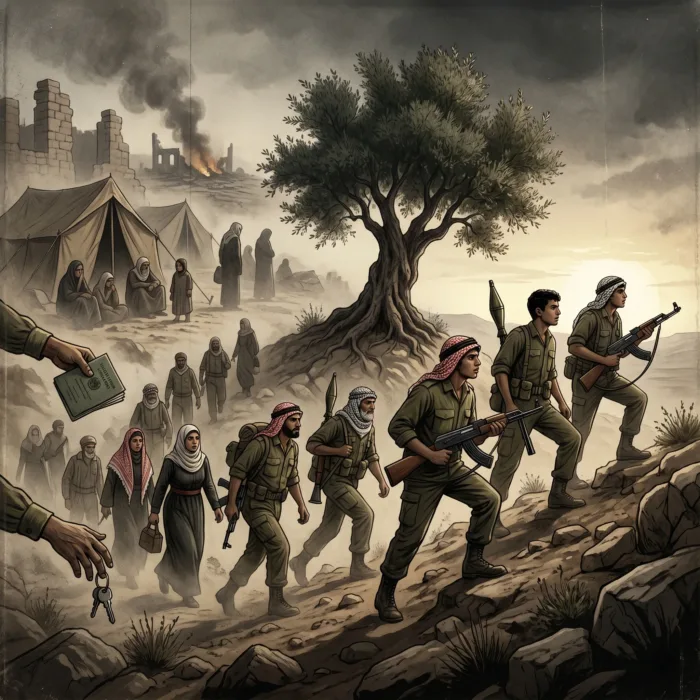
This eighteenth article examines the emergence of independent Palestinian movements following the failure of regional states to secure liberation. It details the ideological shifts and strategic calculations that defined the early era of armed struggle.
The aftermath of 1967 brought temporary conflicts, culminating in the 1973 October War. However, this military engagement ultimately paved the way for controversial peace treaties that deeply isolated the Palestinian cause.
The Six-Day War of 1967 stands as one of the most stunning military defeats in modern history. This sixteenth article delves into the political blunders, the military unpreparedness of Arab states, and the profound consequences of a war that saw Israel triple its controlled territory in mere days, cementing a new reality for the Palestinian people.
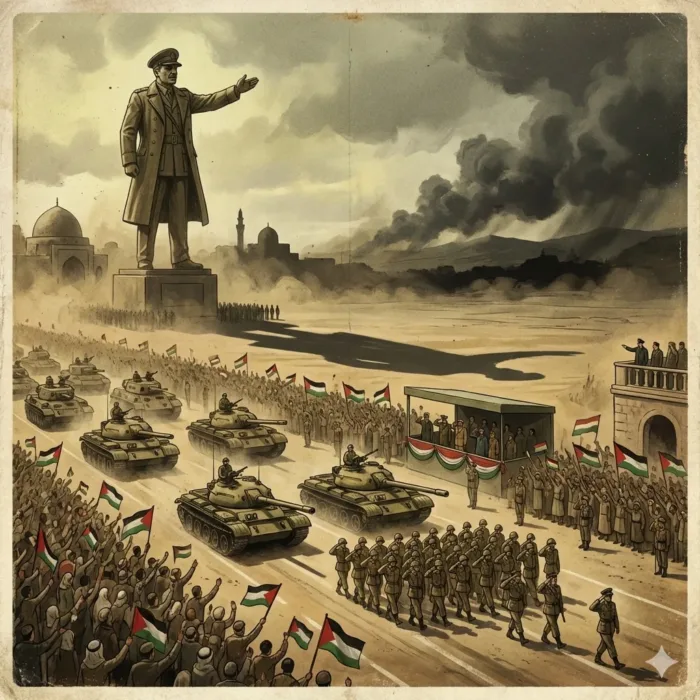
While Israel consolidated its power, the Arab world was thrown into turmoil. The fifteenth article dissects the era of military coups and the rise of Arab Nationalism, revealing how regimes in Egypt, Syria, and Jordan used the Palestinian cause as a political tool while crushing any genuine movement for liberation, ultimately paving the way for the second catastrophe.
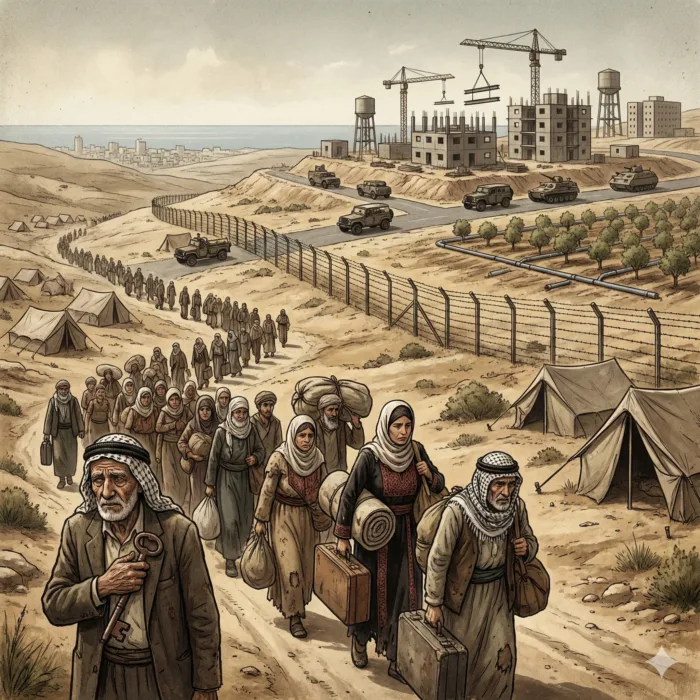
Following the catastrophe of 1948, a new dark era began. The fourteenth article examines the years between the Nakba and the 1967 war, detailing how the Zionist Occupation exploited the 1956 Suez Crisis to secure strategic victories, while Arab regimes suppressed resistance and Palestinian Refugees struggled to survive a social and political earthquake.
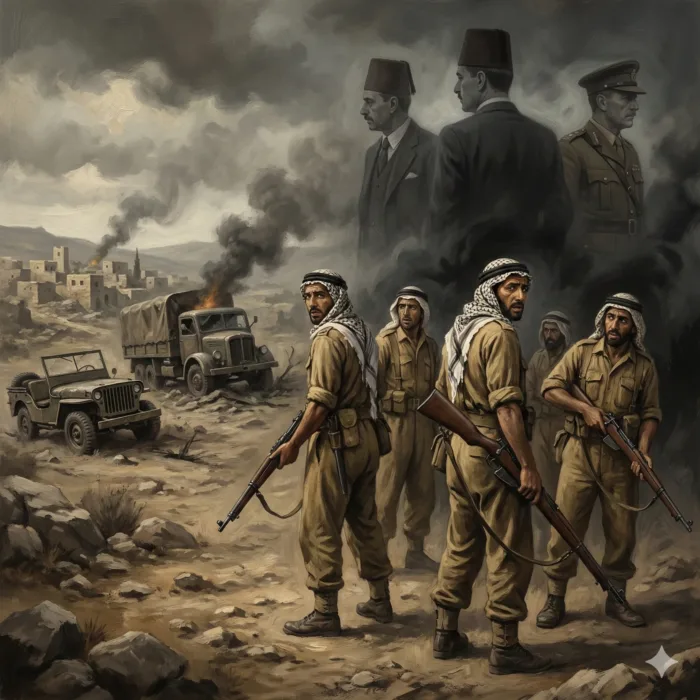
The entry of the Arab Armies into the 1948 War was meant to save Palestine, yet it resulted in its loss. The thirteenth article dissects the catastrophic failure of these armies, analyzing the military disparities, the treacherous political leaderships beholden to the British, and the devastating truces that allowed the Zionist state to seize 78% of the land.
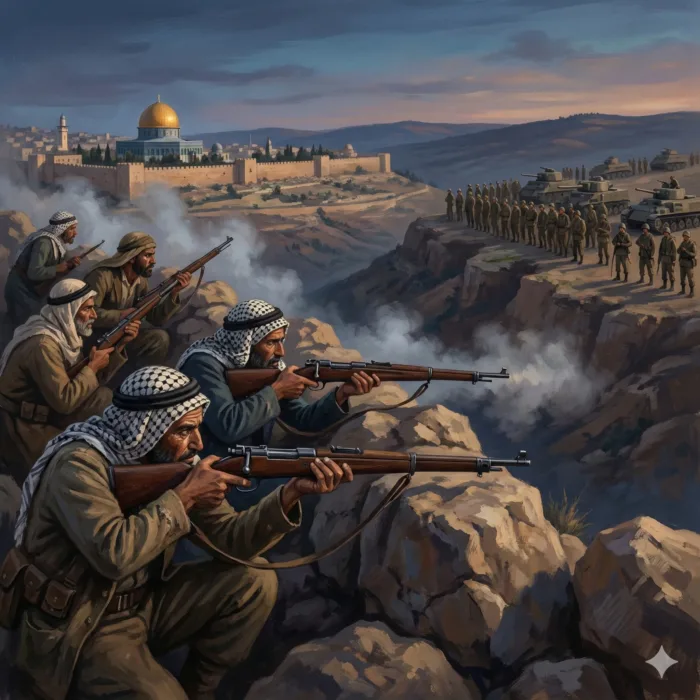
As the 1948 war commenced, Palestinians held 94% of the land. The twelfth article uncovers how they lost it, analyzing the three levels of defense: the heroic indigenous Palestinian Resistance led by Abd al-Qadir al-Husseini, the chaotic Arab Salvation Army, and the official Arab armies. It reveals how political maneuvers and withholding of weapons paved the way for The Nakba.